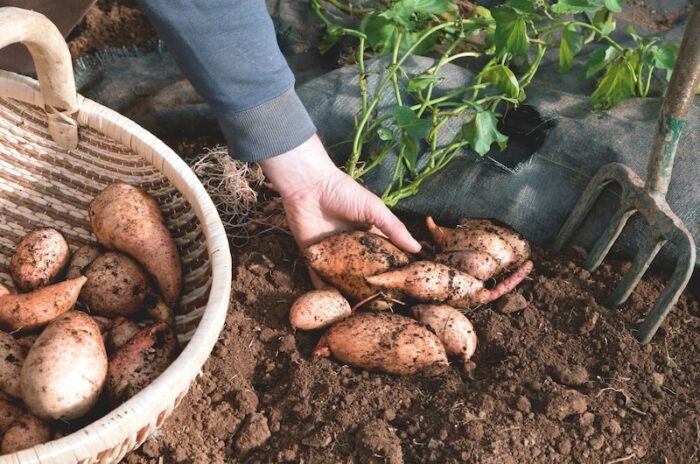
Seed sowing in Scotland & Northern England

We had a question on the forum about vegetable growing in Scotland where it can get a little colder than here in Devon – so we’ve put together a list of varieties that should thrive in these conditions.

Beetroot Boltardy and Beetroot Globe 2

Broccoli Autumn Spear and Purple Sprouting Broccoli

Brussels Sprout Bedford Winter Harvest and Brussels Sprout Wellington

Cabbage April, Cabbage Greyhound, Cabbage January King and Cabbage Wheelers Imperial.

Carrot Chantenay Red Cored, Carrot Eskimo and Carrot Early Nantes

Cauliflower All The Year Round and Cauliflower Galleon

Curled Cress

Cucumber Long Green Ridge and Cucumber  Telegraph

Leek Musselburgh, Leek Autumn Giant 3 Albana

Dwarf Green Curled Kale

Lettuce All The Year Round, Little Gem Lettuce, Lettuce Unrivalled, Lettuce Webbs Wonderful and Cos Lettuce Lobjoits Green

Onion Ailsa Craig and Spring Onion White Lisbon

Marrow (Courgette)  Green Bush and Marrow Tiger Cross

Melon Sweetheart

Parsley Favorit

Parsnip Tender & True

Radish French Breakfast and Radish Scarlet Globe

Perpetual Spinach

Swede Brora, Swede Ruby and Swede Invitation

Sweetcorn Sundance

Tomato Ailsa Craig and Tomato Moneymaker

Pea Kelvedon Wonder and Pea Onward

Turnip Golden Ball, Turnip Purple Top Milan and Turnip Snowball

Beans: French Bean The PrinceRunner Bean Scarlet Emperor and Broad Bean Giant Exhibition Longpod

Of course some of these varieties are also available as plug plants but growing from seed is much more rewarding! Let us know how you get on.

Tags: , ,

No Comments

Everything you ever wanted to know about potatoes…

One of our fastest-selling vegetables last year was the potato, as people realised how easy they are to grow and how delicious freshly harvested potatoes are to eat!

Types of potato
You may have heard of the term floury or waxy potato but did you know that this was determined by the amount of water contained within them?
Floury Potatoes are drier and are good for dishes where you want fluffy potatoes or mash – but beware these are the types that can go to mush if cooked too long.  Varieties to look for Estima, Maris Piper, Rooster and King Edward.
Waxy Potatoes are wetter and feel harder than the floury types.  They are firm and hold their shape so are good for eating with salads. Varieties to look out for Charlotte and Maris Peer.

What is the difference between:
First earlies – As the name suggests this is the one to plant for ‘new’ potatoes.  Planted in January to March they take only around 10 weeks to come to maturity and should be ready to harvest June to July. 
Second earlies – Will mature a little later than ‘firsts’, usually ready July to August.  Harvest straight away for small ‘new’potatoes or leave in the soil longer and get bigger Maincrop type spuds.
Maincrop – take the longest to mature (around 15 weeks) and are ready in September to October.  As they are left in the ground longer they produce much bigger potatoes.
2nd cropping or ‘Christmas’ potatoes: These are cool-stored first or second early varieties that are planted in mid summer to produce ‘new’ potatoes in late autumn or near to Christmas.  They are ideal for growing in potato buckets which can be easily moved if there is an early frost.  Look out for Maris Peer, Carlingford or Orla.

What is chitting?
Chitting is just leaving your potatoes to grow little shoots.  Chitting is not essential but it gives them a quicker start once they are planted out.   Put them end up in a light, frost-free place and wait for the sprouts to appear. Many people find egg boxes ideal containers in which to do this. The place where you chit them needs to be light as other wise you will get long weak shoots (so don’t use those forgotten potatoes from the veg rack!)

When to plant potatoes
While First earlies can be planted out as early as January, you should always be aware of the likelihood of frost in your area. Traditionally potatoes are not planted out until you can be sure that the first frosts are over.

How to grow potatoes
In the soil – Potatoes are traditionally grown in beds which are dug over and prepared with manure in the autumn.  Over the winter the frost breaks up the soil, then when the weather get better you plant your seed potatoes.  However if you don’t get round to preparing your bed in the Autumn, all is not lost just dig a trench (or if you have a very light or sandy soil don’t even dig a trench) add some organic matter, cover this over and put the seed potatoes on top.
With both methods it’s important to ‘earth up’ (cover over) the rows so the tubers on the top are not exposed.  Do this until the emerging plants are too big to do so, this helps control the weeds and also gives the plant more room to grow.
In buckets – Ideal for the patio, put a 3 or 4 potatoes in a large container, or specialist potato bucket or barrel and as the shoots appear cover then up with more compost.

When to harvest them
The longer you leave the potatoes in the soil then the bigger they become.  Earlies are harvested quickly so tend to be small, usually just after the plant has begun to flower while maincrops are left longer to become bigger, normally after the flowers have died back. If you are unsure about how big your tubers are then it’s okay to have a gentle rummage about under the soil.

How to store them
Store in a very cool, dark frost free place.  Potatoes exposed to the light turn green and are  bitter and poisonous, protect from the frost as frosted potatoes turn to mush while too warm conditions will cause the potato to sprout.

Thanks to the Potato book and the Potato Council’s  Lovepotatoes website.

Potato Book

Potato Book

Tags: ,

No Comments

A touch of frost

I haven’t braved the back garden for a few weeks – the ground is either too boggy or frozen, and working during the week means that, in winter, the only chance you get is at the weekend. Last weekend I decided to venture out to survey the damage done by the snow, frost and rain.

I’ve lost a few perennials that have survived previous winters – my Echium pininana (pictured) which was about four feet high at its prime – now looks a sorry site and my Echinops that I was so proud of, looks like it’s had its day. But there is some good news in the corner – some bulbs are showing their heads. I didn’t plant them last Autumn so they mush have been there a bit longer but I can’t for the life of me remember what variety they are!

echium

A sad looking Echium

bulbs

Bulbs - crocus perhaps?

Tags: , , , ,

No Comments

In Your Garden In February

In Your Garden This Month

Wow! What a month January turned out to – we certainly had some very cold and frosty weather along with quite a bit of snow which hopefully has, by now, disappeared from your area. Lets hope that only a few of the bulbs and plants being over-wintered in greenhouses were lost during the severe weather we all seemed to experience.

Hopefully the weather will start improving in February as this can prove a busy time of the year for gardeners. All of a sudden there are a thousand and one things that can be done now, such as early sowings of flower and vegetable varieties being started so as to give them a head start. It can also be a good time to start preparations for sowing new lawns, as well as getting the machinery serviced and ready for the coming season if you haven’t done so already.

General

In areas where the weather is milder, perennial plants that had been in clumps could be divided and the outer, young, healthy parts replanted into freshly prepared soil. It may even be an ideal time to dig up and reposition any shrubs or perennials that have become overcrowded. With a number of plants now dying down for the winter, and before new shoots appear although they will grow through, a fairly thick mulch, 5-7.5cm (2-3”), could be spread around perennial plants, trees, shrubs and even fruit, but be careful not to cover any dwarf bulbs that may be in flower.

It may prove very beneficial for a large, clear sheet of polythene, held in place by either bricks or lengths of wood, to be placed over the soil keeping off any heavy rain, ensuring the soil remains dry. As time permits, the sheeting could be folded back, the soil dug over and the sheet replaced – this is particularly helpful when soils are heavy clay. If you are short of time, another solution may be to cover the soil with compost or manure, and then as spring approaches lightly fork in to the surface which will prepare the soil for planting.  Where early sowings are going to be made, it is a good idea to warm the soil up by a few degrees, therefore, approximately two weeks prior to sowing cover the soil by using a single layer of polythene or fleece. By doing this it will quickly encourage germination and establishment.

Do keep a look out for pests such as whitefly, and any plants or cuttings that are seen to be infested should be sprayed.

A good way to provide extra winter protection for plants is to use a cold frame which should be situated in full light thereby receiving warmth from the sun but sheltered from cold winds. Ventilation should be provided on warm days so it is a good idea for them to be opened up which will prevent a build up of warmth, however, remember to close them at night. To provide extra warmth an old rug, blanket or even overcoat could be used on nights when conditions are very cold.

Ground that hasn’t been dug over yet could be covered with a layer of compost or manure ready for lightly forking in to the surface during spring so as to prepare the soil for planting.

Pots and seed trays which have been left should be thoroughly cleaned, using a little household disinfectant and rinsing with clear, warm water, so that they can be put away for use in the spring. A brush might come in handy to remove any stubborn dirt and old compost that might be harbouring pests or diseases in the pots and seed trays.

It is still a good idea to keep gutters on greenhouses clear of leaves and debris, and to allow maximum light in keep the glass washed.

Shrubs

To avoid tree and shrub branches from breaking, use a broom to knock off any snow laying on them, should you still be having this type of weather in your part of the country. Tree ties should be checked making sure they aren’t cutting into the bark. Any worn or damaged ties should be replaced. Should you have experienced any storms or high winds check to see that any tree stakes and ties haven’t been damaged. Fleece or fine mesh netting is an ideal way of protecting vulnerable plants from severe frost. Our organic fruit and potato fertiliser may be sprinkled around fruit trees and bushes

Vegetables

Early varieties of potatoes should be chitted (laid out in trays and allowed to form short sprouts) in a cool, light, frost-free place ready for planting towards the end of March – this is proven to increase the yield of the tubers. In the greenhouse or under cover in a warm propagator, you can now begin to sow seeds of cabbage (summer/autumn maturing), celery, parsley, sweet and cayenne pepper, tomato, leek and onion. Outdoors (under cloches or in a cold frame) you can sow early varieties of carrot, such as Amsterdam Forcing, broad bean, such as The Sutton, and parsnip. Shallots can also be planted out from the middle of the month. Remember asparagus crowns can be ordered now even though delivery may not be until late March/early April but it is a good time to start preparing the site where they are to grow, ensuring the ground has been dug thoroughly making sure it is free from weeds.

Fruit

Continue to plant soft fruit as the weather permits. Any uncompleted pruning of established fruit trees and bushes should be carried out straight away before growth commences, otherwise this year’s crop may be reduced. It is a good time to prune sideshoots back to two or three buds on trained gooseberries. Rhubarb crowns should be covered with buckets which will help to encourage early pickings, also lift and separate any congested clumps.

Outdoor grape vines should be pruned so that last year’s fruited shoots will be shortened therefore encouraging new growth.

Remove any branches getting in the way and prune large apple and pear trees. Also, check any fruit you have stored and remove those that show signs of rot or deterioration.

Flowers

Sowings can be made in a propagator, in a heated greenhouse or on a windowsill at a temperature of approximately 21ºC (70ºF) of many summer bedding plants, such as geranium, petunia, impatiens (busy lizzie) and nicotiana along with some perennials. Take care not to sow too thickly or over-water as this can lead to the seedlings damping off (small patches of them suddenly dying for no apparent reason). Many people find that its best to pour the seed into the palm of their hand first, rather than sowing it directly from the packet.  If seed is very fine, it can be mixed with silver sand to make it easier to sow thinly and evenly across the surface of the compost.

During this month cuttings may be taken from chrysanthemums that have been over-wintered.

Remember to regularly deadhead pansies, primulas along with other winter/spring bedding plants as, depending on the temperature, you may find they flower at varying times. Also by removing faded flowers this will help to prevent seeds setting which in turn reduces flower performance.

As amaryllis are now in full bloom, or will be very soon, the plants should be watered once or twice a week. This should be done by standing the pot in a saucer of water, allowing the plant to take as much as required, and so that the roots do not remain in the water after approximately half an hour remove the pot from the saucer and throw any water that is left away. Amaryllis are best kept on a windowsill as they prefer warm and light conditions. A liquid feed could also be given once a week as this will contain necessary nutrients.

Any shrubs or flowers that may have become too large for where they are at present can be moved to a new position during February.

Prune back hardy summer-flowering clematis as rapid new growth will be produced during spring which will carry new flowers later in the year.

Early flowering bulbs such as alliums and dutch iris that were planted last autumn should be coming into their own during this month. Anemone tubers should be soaked overnight so that they can absorb water which encourages them to expand. They can then be planted in pots for an early display. Alternatively plant outside in March or early April.

A minimum temperature of 4ºC (40ºF) should be maintained for tender plants such as fuchsias. Plants should be checked over at least once a week removing any dead leaves or flowers which will cut down the risk of fungal disease. Shoots that may have started to rot should be trimmed back to healthy growth. Keep compost almost dry making sure there is good air circulation for the plants – a fan heater may help in doing this!

Clumps of perennials can be divided with the healthy young outer portions being replanted into freshly prepared soil – this should only be carried out in milder areas of the country.

Towards the end of the month start begonia tubers into growth, in trays of compost at a temperature of 15ºC (60ºF). Previously grown tubers with any dead foliage still remaining should be cleaned off and then the tubers repotted in fresh compost. Water them in and a temperature of about 16ºC (60ºF) should be kept. It’s also a good time to plant new tubers of begonias and gloxinias.

Carry on planting up lilies in pots, ideally five bulbs of the same variety to a 25cm (10”) pot, and terracotta pots are more sturdy for when the tall flower spikes develop. If you haven’t already, it’s not too late to order – we have a great range of varieties on offer (see our bulb section for more information).

Lawns

As milder weather conditions arrive, weeds will start to grow on areas of ground already prepared in preparation for sowing a new lawn – they should be brought under control before sowing begins in April. On existing lawns, brush off any unsightly wormcasts with a stiff broom, besom or rake. If you haven’t already done so, now is a good time to get your lawnmower serviced.

Birds

Also if you have a floating pond heater continue using it to prevent ice from forming over the entire surface of your pond.

Providing a supply of food for birds, such as a special wild bird food mix, would be appreciated, at this time of year especially if the weather stays cold and unsettled. Remember though to place out of reach of cats.

Tags: , , , , ,

No Comments

10 Pinks for just £6.00

If you like scented plants that flower and flower, these pinks are for you!
Dianthus Doris – scented double pale pink flowers with darker pink centres and silver green foliage. Long flowering – right through the summer and longer if deadheaded. Hardy. Height 40cm (16″). Flowers July-September.
Dianthus Cranmere Pool - large headed pink, with double palest pink flowers with magenta eye. Great for cut flowers with a delicate perfume. Long flowering and fully hardy. Height 25cm (10″). Flowers July-September.

Tags: , ,

1 Comment

Save 50% on our Perennial Plant Collection

For everyone who loves a beautiful garden, there’s always room for perennials! Perennials are the plants that truly keep on giving. They’re also a cost effective way to brighten your garden year after year and whether in borders or patio containers, they will delight you with their stunning shapes and colours. The more you plant, the more dazzling the display will be.

This collection includes 19 plants of of 8 different perennials.
Geranium Himalayense Plenum – A stunning double geranium with ruffled flowers of striking purple and red.
Eucomis Twinkle Stars - It’s a dwarf variety with a very short flower stem that appears in July and can flower till the end of August.
Sisyrinchum Sapphire - This jewel of a plant will look beautiful drifting across a border, sparkling in a patio container or brightening a rockery, its sapphire blue flowers with yellow eyes nestling amongst emerald green foliage.
Arisarum Proboscideum - The uniquely shaped flowers are a lustrous brown with a white throat that tapers to a long, curled ‘tail’!
Helleborus Orientalis Tutu - With a pleated anemone-like centre, its deeper pink petals with lighter picoteed edges surround golden stamens.
Epimedium Orange Queen - The pretty heart-shaped evergreen foliage – young leaves can be blushed red – is a wonderful foil for the dancing, pale copper orange flowers.
Rudbeckia Hirta Cherry Brandy - The bright cherry red flowers are ideal for attracting butterflies into your garden and are also superb as a cut flower.
Ascelpias Tuberosa - A very popular long flowering perennial with bright orange flowers borne on sturdy stems.

Tags: ,

No Comments

Suttons Seeds at the Victoria Falls

We’re happy to  support a number of charities and last year we were pleased to help Angela Lancaster who is working with the community of Victoria Falls in Zimbabwe. Angela has just sent us a long note with details of all the good work that taking place there so we thought it would be a good idea to share some of this with you.

“My first encounter with the community of Victoria Falls was last January when I visited the area on holiday, working with the people on a lion rehabilitation project. It was clear that everyone was starving and living on roots and grass; the shops were empty of food. On arriving back in Britain my thoughts revolved around how could I help these people.

On contacting Suttons seeds, I was overwhelmed by the support given. My next challenge was to safely get the seed into Victoria Falls and by the time the seed arrived, the drought season had set in and the people of Victoria Falls had little means of water supply. I felt I had to come to the rescue in providing a water system from the waters of Victoria Falls. Then the plating commenced and the area became the envy of the area. In the summer, I sent out some more seed – beans, tomato, lettuce, sunflower, peppers, chilli and courgette seeds to the lion project.

At the beginning of November, I flew again and I was expecting to see your seed growing but much to my surprise I only found the remnants of seed I sent out in August. I was fast becoming aware of the speedy growing rates in the African heat.

I was amazed with the pride these people now have in growing their own food, there was not a weed in sight and the grounds had been extended. With this batch of seed, the distribution is being extended making full use of the rainy season for growing.

My most amusing story was that they were eating the leaves of the courgette plants, they had never seen this vegetable before and usually refer to it as the one that looks like a cucumber! Everyone has already eaten lettuce, cucumbers and courgettes and some are eating the onions early because they are looking for flavour in the basic staple foods.

Thank you so much to Suttons Seeds, I only became aware of how important your input of seed was when I visited in November, they were so grateful and even more joyous for the second batch. You have enabled the people of Victoria Falls to vary their diet, without doubt they have prevented many diet-related illnesses and help how healthy the people in the photographs look.”

You can see the photos on our Facebook page.

Tags:

No Comments

Suttons goes Pink

For the past few months we have been working very hard on a fantastic project with the charity Breakthrough Breast Cancer.

We are supporting Breakthrough Breast Cancer to help build a future free from the fear of Breast Cancer.

Did you know 1 in 9 women will be diagnosed with breast cancer? It is the most commonly diagnosed cancer in the UK and today 35 women will die from this disease.  Many Suttons staff members have been touched by breast cancer in some way and when it came to selecting a charity, Breakthrough Breast Cancer was at the top of our list.

Breakthrough Breast Cancer is the UKs leading charity committed to fighting breast cancer through research, campaigning and education.

We have created an exclusive Breakthrough Breast Cancer range called ‘Suttons goes pink‘. We will donate at least 10% of the retail price from each sale to the charity.

We are so excited about this range and have worked hard to find some fantastic pink products to include.

The Pink Flower Garden Collection contains 45 miniplants of Petunia Orchid Mist, 45 miniplants of Impatiens Fanciful Sweetheart and 45 miniplants of Stock Apple Blossom.  That’s 135 miniplants for only £16.95.  I am a BIG fan of flower plants and will certainly be getting this pack for my garden.  Not only are they the easy way to a beautiful summer garden, we will donate £2 to Breakthrough Breast Cancer.  Bonus!

Our Potato Growing Kit was one of our best selling items last year, so we decided to Pink it up!  Our Pink Potato Planter Kit not only has pink planters (!!!), we have chosen 3 special varieties to go into it.  You will receive 3 pink potato planters, 5 tubers of Swift (a fast growing variety for an early crop), 5 tubers of Anya (a nutty flavoured variety with pink skin – of  course) and 5 tubers of Sunrise (which is great for mash and has pink eyes).  This pack is also £16.95 and £2 goes straight to Breakthrough Breast Cancer.

We also have a PINK Champagne Rhubarb AND a Pink Flower Basket Collection.  Go to www.suttons.co.uk/breakthrough to see our full range of Suttons goes pink products and help us to fight breast cancer.

We are officially launching tomorrow but the products are available to buy now.

On a personal note, I have loved working on this project.  It has been inspiring working with the Breakthrough team and a special mention to Rachel Cirin in the Corporate Partnerships team whose enthusiasm has made this an exciting and fun project to work on.

Note – You COULD share this on your facebook / twitter / etc by clicking on the SHARE link below.  :-) Help us to help Breakthrough Breast Cancer win the fight against breast cancer.

Tags: , , , ,

No Comments

In Your Garden In January

January is fairly quiet apart from starting to raise plants from seed and keeping your garden looking its best. Also try and take time to relax by the fire checking out the wide range of young plants, both flower and vegetable, we offer in our Main Catalogue, or our Plant Catalogue, so why not request a copy of one or even both! 


Flowers

Sowings can be made of antirrhinum, begonia, dianthus, geranium, gloxinia, lobelia, salpiglossis, statice, sweet pea and verbena. Some perennial plants such as anemone, auricula, aquilegia, hollyhock and kniphofia can also be sown at this time. Sweet peas that have been raised from autumn sowings can be encouraged to form sideshoots by pinching out the seedling tips. 

Cut down flowering perennials to ground level. Any newly planted perennials or winter bedding that have been lifted by frost should be firmed back in.

When leaf shoots begin to show on crocuses, remove the pots from the beds where they had been placed, clean the pots of any old compost and place them in a cold greenhouse for the flowers to develop.  

Bare-rooted roses can continue to be planted. To avoid disease refrain from planting new roses where old ones have been removed from. However, the exception to this is if the soil has been replaced and conditioned.

Bulbs

To prolong the flowering period of winter-flowering houseplants avoid droughts and any dry places such as near fires or radiators, by keeping them in good light and a cool position. To prevent disease remove dead leaves from foliage of plant. Remove any dead flowers on cyclamen and azaleas to prolong their flowering period. Daffodils and hyacinths can be force fed to build up bulbs. Prior to bulbs appearing spread mulch over the flower borders and also around shrubs.

Hippeastrum bulbs can be planted in free-draining compost and placed somewhere warm, eg shelf over a radiator, encouraging strong root development along with flowering. Do not leave them standing in water.

Bulbs, corms and tubers that are being kept in store should be checked regularly for signs of deterioration or rot. Any diseased ones should be removed immediately, sprinkling sulphur powder on the others to prevent attack by disease.     


Vegetables

Seed potatoes should be stored in trays, in a light, cool, frost-free place to chit ready for planting in March or April. Sowings can still be made of Broad Bean Aquadulce Claudia and The Sutton (under cloches) if conditions are suitable. In the greenhouse, sowings can be made of aubergine and summer maturing cauliflower.

In colder parts of the country, and for exhibition, sowings of onion should be made in the greenhouse, harden off the plants in March prior to planting outdoors in April.

Prepare a deep trench, for where runner beans are to be grown next summer, by digging out and filling with rotted compost from your compost bin, plus during winter you can carry on adding kitchen waste. Then in late spring cover with soil and sow your beans on top.

Fruit

Continue to plant raspberries and other soft cane fruit, however, if soil conditions are unsuitable when you receive your plants, plant them temporarily in a spare piece of land or pot to prevent the roots drying out, until there is an improvement. Established fruit bushes and trees should be pruned.

Remove any old stems to avoid over-crowding in the middle of whitecurrants and redcurrants. Also the sideshoots should be pruned so there is just one bud.

Dormant clumps of early rhubarb should have buckets or forcing jars placed over them which will encourage stems to form giving an early harvest.

Nectarines and peaches that are being grown in pots should be moved under cover for the winter, such as in an unheated greenhouse. Keeping rain off these trees will assist in preventing the spread of peach leaf curl disease. The early flowers will also be protected from frost.

Trees & Shrubs

New plantings should be protected from the wind by erecting a shelter around them. Move container shrubs being over-wintered into a cold greenhouse, cold frame or even wrap the pots in bubble plastic to give protection. Fleece or netting should be used to protect vulnerable plants from severe frost. Tree ties and stakes should be checked for loosening. Use wire netting to protect outdoor seedbeds, pots and trays from damage by squirrels. Glue bands can be applied around tree trunks to control pests such as the winter moth.  

General Information

All leaves that have fallen, along with the ones under bushes and hedges, should be cleared away as they give protection for snails and slugs during the winter months. Also remember that falling leaves can clog up greenhouse gutters. All the raked up leaves may be left to rot down in a leaf bin.

To let in more light, the greenhouse roof can be washed down removing dirt and grime. It is also a good idea to empty and clean water-butts. Trays and pots can be cleaned ready for use. Another idea is for tools and equipment such as lawnmowers to be cleaned and serviced.

Any areas of ground that are presently empty can be dug over forking in plenty of rotted manure or compost. Should conditions prove wet, and we have certainly had a good deal of rain lately, a polythene sheet can be used to cover the area helping to keep any further rain off, then once the soil has dried out digging can begin again.

To improve drainage and reduce waterlogging, stand planted patio pots up on feet so that they are slightly raised from direct contact with the ground. Also during very cold spells move them to a sheltered position.

Ponds & Birds

Leave netting in place that was put over ponds last month so as to prevent any falling leaves from going in. Also if any filters or pumps haven’t been removed yet it may be worthwhile doing so thereby avoiding any damage from freezing water during cold winter spells. 


Please remember to provide a supply of food again this month for all the birds who visit our shores from colder countries.

Tags:

No Comments

New Year’s Gardening Resolutions

We asked everyone at Suttons for their New Year garden resolutions and here are just a few of them:

Make time for your garden.
Leave the housework for the dull, wet days, get out into the garden whenever you can.

Don’t put off the jobs you don’t like doing.
It’s something we all do, get started on the jobs we like but leave the ones we don’t. But they just get worse the longer you leave them.

Keep on top of the weeds.
Think how much harder it is to get rid of well established weeds. Try lightly hoeing regularly to take the effort out of weeding. Remember they always grow faster than you think!

Clean off your tools before you put them away.
And most important of all make sure you do put them away. Now, in which flower bed did I leave my trowel?….

Feed the birds.
The coldest months of the year are yet to come.

Bring wildlife into your garden.
Not just birds, encourage hedgehogs, butterflies and bees too. They eat the aphids, slugs & snails and generally make the world a better place.

Plan.
Try to look at your garden with fresh eyes. Do you like the colour combinations? Do you never use the path but always cut across the grass? Never seem to have enough of the right vegetables and too many of the wrong ones? Then sit down and plan exactly what you want to do throughout the year.

Finally, make time to enjoy your garden.
Gardening shouldn’t be all hard work, make time stroll around to admire your handiwork or sit back and enjoy the colours, fragrance and birdsong.

Best wishes for 2010 from all of us at Suttons.

Tags:

No Comments